After the Storm, the Roads Don't Follow the Map

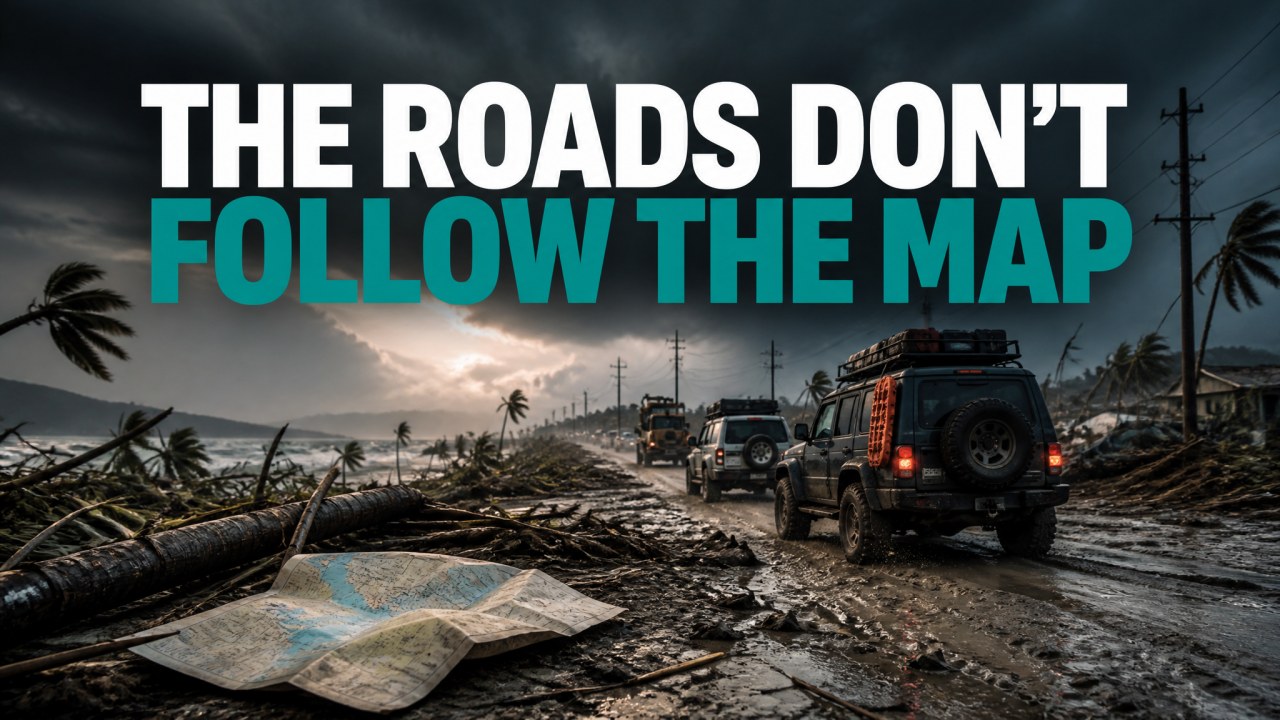
After Hurricane Ida came through, we went out with the response team to help. Boots on the ground, rigs in the field, people pulling together after the storm.
Disaster response is a lot of miles, a lot of heavy lifting, and a lot of people showing up for each other. Some days that means moving supplies. Some days it means clearing a road. All of it matters, and all of it stays with you.
There's a line from that work I think about constantly: after a storm, the roads don't follow the map anymore.
The map was drawn before the storm. It describes the world as it was. The storm rewrote the world, and now the map is a document of somewhere that used to exist. You can't drive it. You drive what's in front of you — the closed road, the detour that isn't on the map, the passable stretch the map says is impassable.
Crisis operations are the same. The runbook describes the system as it was written. The architecture diagram describes the system as it was designed. The status report describes the system as of the last update. And in a real incident, all three are the map, and the storm is the ground truth. The teams that recover are the ones that put the map down early and start driving what's in front of them.
That's not an argument against runbooks. It's an argument about how you use them. A runbook is a starting point, not a promise. The first question in any incident shouldn't be "what does the playbook say" — it should be "what is actually true right now, and who can confirm it." Ground truth beats documentation every time, especially when the documentation is confident.
The other thing the response work taught me: the capabilities you built for one purpose become infrastructure in a crisis. The rigs we'd built for offroading became logistics vehicles. Nobody planned that. We just had vehicles that could handle roads that didn't follow the map. Same in tech. The monitoring you added because it was cheap, the cross-training you did because it was good practice, the people who know how to operate without a manager in the room — that's the fleet that shows up when the storm hits.
And the last part, maybe the most important: when a storm hits, the people who can help go help. It's that simple. In a crisis, the org chart matters less than who's willing to be useful. The teams that survive incidents aren't the ones with the best process. They're the ones where people show up for each other.
The map is a model. The team is what gets you home.
Think this argument fits your event? Tell me about the room — the calendar is selective.
Start a conversation