AI Is Creating a New Kind of Technical Debt

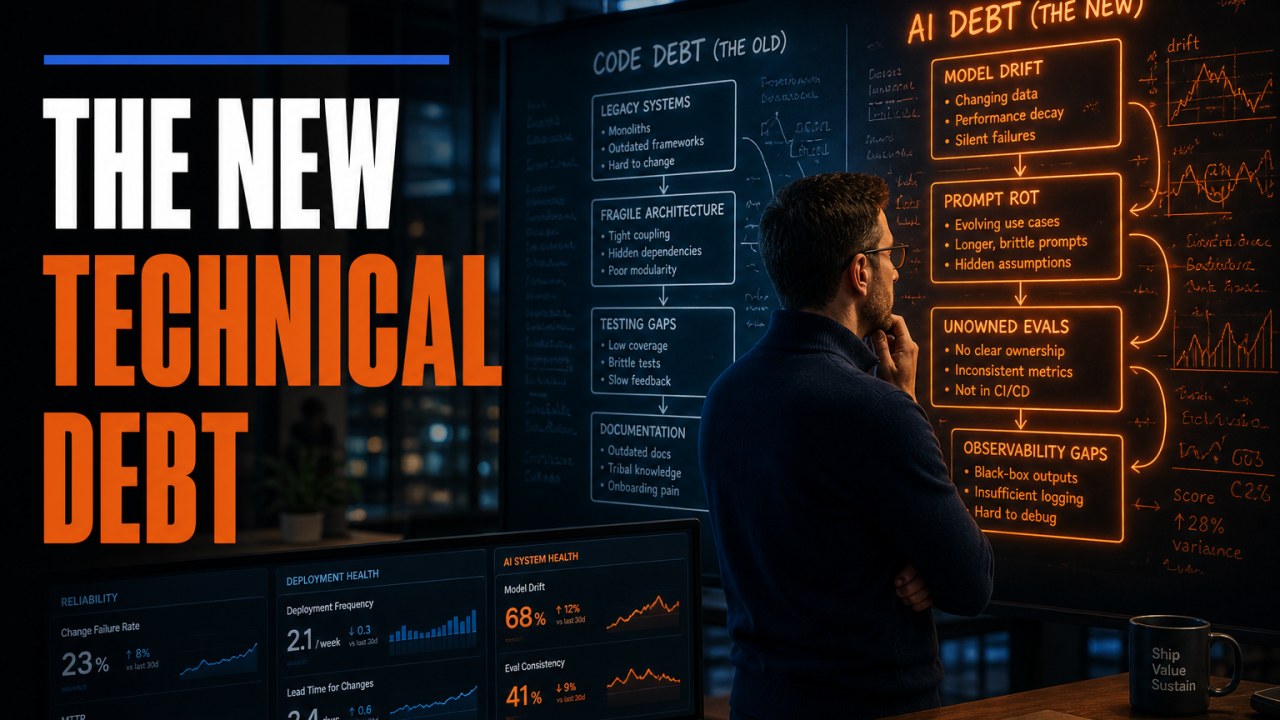
We understand code debt. We have tools and practices for managing it. We don't understand AI debt yet. And it's accumulating faster than most teams realize.
Three Categories of AI Debt
Generated code debt. AI optimizes for the prompt, not the codebase. The result is code that works but doesn't fit — inconsistent patterns, missing error handling, subtle loss of coherence. Over time, the system becomes something no one fully understands.
Cascading output debt. When one AI feeds into another, errors compound instead of averaging out. Each component looks fine in isolation. The cost shows up as systemic unreliability that defies root cause analysis.
Prompt rot. Prompts degrade silently as models change and data shifts. A prompt that worked six months ago produces worse results today. Nobody notices until a downstream system fails.
Why This Debt Is Worse
Traditional tech debt is visible in the code. You can see the mess and prioritize the fix. AI debt is invisible. The generated code works. The cascading outputs are within tolerance. The prompt produces something reasonable. The debt only materializes when conditions change.
What to Do
Version your prompts like code. Every change should be tracked, reviewed, and tested. Monitor output drift against historical baselines. Audit generated code with the same standards you'd apply to a new hire. Track error rates at every stage of cascading AI pipelines.
The teams that manage AI debt well will have an advantage that compounds. Their systems will get more reliable while everyone else's quietly degrade.
A Real Example of AI Debt
I talked to a team recently that had been using an AI-powered code review tool for six months. The tool flagged potential issues, suggested fixes, and generally improved code quality. Then the model was updated. Suddenly, the suggestions changed. The tool started flagging patterns it had previously accepted and accepting patterns it had previously flagged.
The team spent two weeks figuring out what changed. The prompts hadn't changed. The codebase hadn't changed. The model had. And because they hadn't been monitoring output drift, they had no idea when the behavior shifted.
That's prompt rot. It's invisible, it's costly, and it's becoming more common as models update more frequently.
Building for AI Debt Management
Start treating AI outputs like code. Version them. Test them. Monitor them for regressions. If you wouldn't accept a code change without a review, don't accept an AI output change without understanding what's different.
This is new discipline for most teams. But the teams that build it early will have a massive advantage. Their AI systems won't quietly degrade. They'll get better over time — because the team will catch problems before they become production incidents.
Think this argument fits your event? Tell me about the room — the calendar is selective.
Start a conversation