Curiosity Is the Only Skill AI Can't Take From You

AI is getting better at almost everything we once thought made us valuable. But there's one thing it can't give us—and one thing I learned very early never to lose: the desire to know what's on the other side of “I don't know.”
The Hard Drive
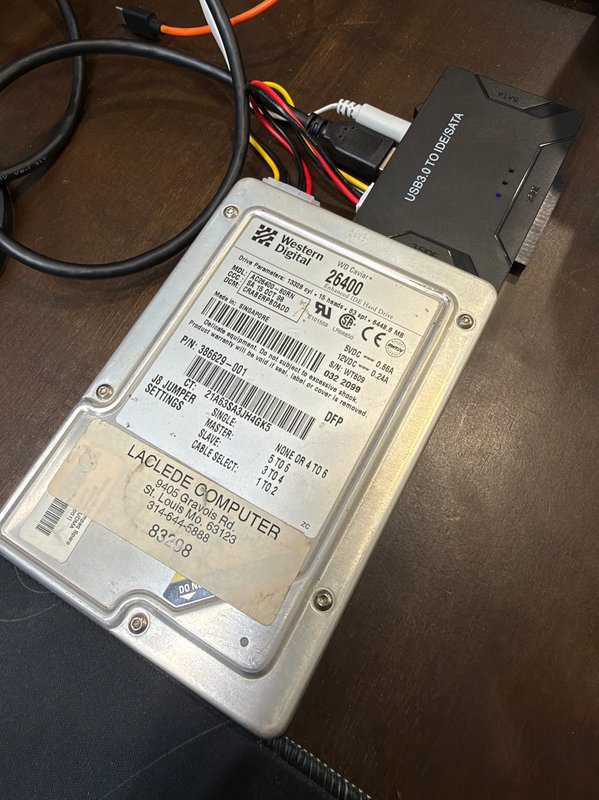
I was going through some old hard drives recently when I found one I hadn't seen in decades. Six gigabytes. It came from Laclede Computer Trading on Gravois in Affton, a little computer store that had been around since the early '80s and finally closed in 2023.
I just sat there looking at it for a minute.
Today, six gigabytes is nothing. I have single files on my laptop bigger than that. But in the late '90s, six gigabytes was a serious hard drive. And it wasn't cheap. Nobody bought a kid a six-gigabyte hard drive back then by accident.
And that's what hit me. I wasn't really holding an old hard drive. I was holding a receipt.
A receipt for the faith my family put in me long before any of us knew where this obsession with computers would lead. They spent real money feeding the curiosity of a kid whose brain never seemed to stop moving.
That little piece of obsolete hardware reminded me of something I hadn't thought about in a very long time.
Before anyone called it ADHD, my mother just knew I had a mind that never stopped moving.
Back then, there wasn't a label for it. I was just a kid with endless curiosity, too much energy, and a brain that was always looking for the next thing to chase. My mother's challenge wasn't figuring out how to slow me down. It was figuring out where to point me.
And, looking back, I'm incredibly lucky that she did.
She pointed me toward computers. Toward books. Toward things I could take apart, understand, build, break, and build again. She didn't try to quiet the wild mind. She gave it somewhere useful to go. She supported it even when she didn't understand it, because I loved it.
It turns out, when you give a mind like that the right direction, it doesn't stop being wild.
It becomes an engine.
The Books Before the Hard Drive
The hard drive wasn't the first investment my mother made in my curiosity.
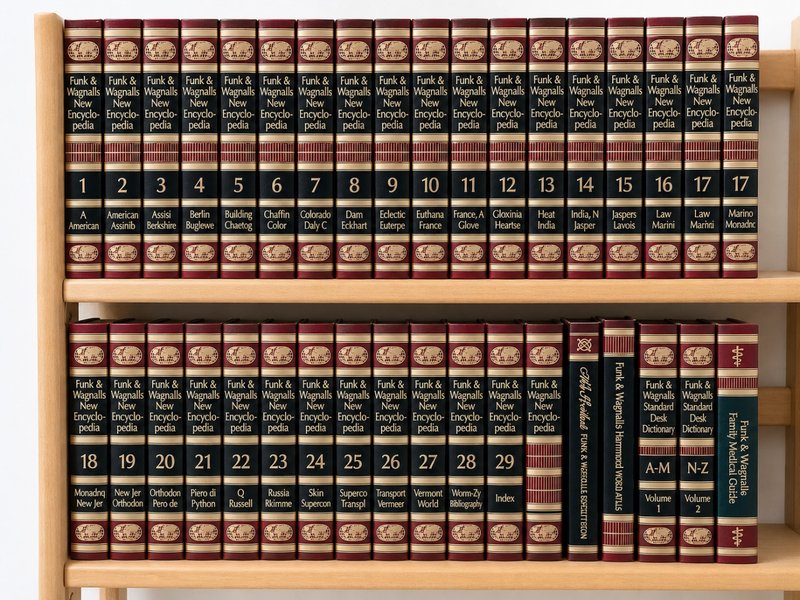
Years before that, there were books. Funk & Wagnalls New Encyclopedia.
If you grew up around that time, you might remember how this worked. Every week or two, the grocery store would offer the next volume in the set for a few dollars, usually as long as you were buying groceries. It was at a Schnucks or Dierbergs in Saint Louis, if I remember correctly.
So you didn't buy an encyclopedia. You built one. Volume by volume. Grocery trip by grocery trip. Over the better part of a year, this encyclopedia slowly appeared on our bookshelf.
For a single mother raising two boys, that mattered.
A few dollars at a time was manageable. But looking back, I realize what she was actually buying us wasn't a set of books. She was buying us access to the world.
And I devoured it.
I would have been somewhere around 12 to 14 years old, and I read those encyclopedias. Not cover to cover in one heroic marathon. I'd grab a volume, find something interesting, read about it, discover something else, follow that, and keep going.
I eventually read the entire set. More than once.
There was no algorithm recommending the next thing. No search box. No hyperlinks. No YouTube rabbit hole waiting for me. You had to create your own rabbit holes. And I did.
Science led to technology. Technology led to history. History led somewhere else entirely. One question created three more, and those three created ten.
I didn't know it then, but I was learning how to learn. That encyclopedia didn't change my life overnight. There wasn't some cinematic moment where I closed Volume 12 and suddenly knew what I wanted to become. It did something much more important.
It planted a seed.
It taught a kid with a wild mind that whenever something made him curious, there was an entire world waiting behind the question.
And once I figured that out, I never really stopped asking questions.
Two stories, same lesson.
My family didn't hand me a skill — they put the tools where a curious kid could reach them. A computer. A shelf of books. And the thing I learned from both is the thing I still run on: be curious, chase the bleeding edge, and have fun doing it.
Here's the thing nobody tells you about that kind of upbringing. It doesn't hand you a skill. It hands you an appetite.
A computer and a shelf of books teach you that the world is bigger than what's in front of you, and that you can reach it if you stay curious long enough. That appetite is what carried me from nerd to CTO. Not a specific technology — those keep changing anyway. The wanting to know. The itch to figure out how a thing works, and then what it could do next.
That's the skill that matters most right now.
The tools I was on the bleeding edge of as a kid are gone. The six-gigabyte drive is a paperweight. The encyclopedia is a shelf of books nobody opens, because the whole thing lives in your pocket now. But the part of me that filled that drive and read those books — that's the part that still works. And it's the one part AI can't take over.
AI is the newest bleeding edge, and it's moving faster than any of the others did. Every few months the thing you just learned gets replaced. If your edge is knowing a specific tool, you're already behind. If your edge is staying curious — chasing the next thing, asking the next question, having fun figuring it out — you keep up. You don't have to love the change. You just have to love the finding out.
Curiosity is the only skill AI can't take from you.
Everything else can be learned, and a lot of it can be automated. But the want to know isn't a task you can hand off. It's the thing that keeps a person moving when the map changes. It's the thing my mother was actually buying when she bought a computer and a set of encyclopedias, whether she knew it or not.
That's the whole arc — from a kid with a wild mind, to a CTO. I never outgrew the curiosity. I just kept getting better tools.
And the newest one (AI) might be the best tool a curious mind has ever been given. The way I see it, it just circles all the way back to what my mother actually gave me: not answers, but tools for pursuing questions.
Think this argument fits your event? Tell me about the room — the calendar is selective.
Start a conversation